A structured interview process asks every candidate for a role the same job-related questions, in the same order, and scores the answers against the same rating scale on a scorecard. Because everyone is judged on identical criteria, structured interviews are fairer, easier to compare, and among the better predictors of job performance in hiring research.
- Decide 3–5 competencies per role before you write a single question.
- Give each interviewer different competencies so the panel covers everything without repeating questions.
- Use a 1–4 anchored rating scale with written examples of what each score looks like.
- Collect scorecards before the debrief so the loudest voice doesn't decide.
What is a structured interview?
A structured interview is one where the questions, their order and the scoring criteria are fixed in advance for a role. An unstructured interview is a free-flowing conversation that varies by interviewer. Research comparing hiring methods, starting with Schmidt and Hunter's 1998 meta-analysis and revisited by Sackett and colleagues in 2022, has consistently found structured interviews predict job performance better than unstructured ones (Schmidt & Hunter, 1998, Psychological Bulletin 124(2); Sackett, Zhang, Berry & Lievens, 2022, Journal of Applied Psychology 107(11)).
| Structured | Unstructured | |
|---|---|---|
| Questions | Same for every candidate | Varies |
| Scoring | Rating scale with anchors | Gut feel |
| Comparability | High | Low |
| Bias risk | Lower | Higher |
| Prep time | More up front | Less |
What are the 7 steps of a structured interview process?
Step 1: Define what good looks like for the role
List 3–5 competencies the role truly needs (e.g., for an Inside Sales Executive: prospecting, objection handling, communication, coachability, CRM discipline). Pull them from the job description and from your best current performers.
Step 2: Plan the interview loop
Map competencies to rounds so each is assessed at least once, and the critical ones twice.
| Round | Interviewer | Competencies | Format | Length |
|---|---|---|---|---|
| 1 | Recruiter | Motivation, communication, logistics (notice period, CTC) | Phone/WhatsApp video | 20 min |
| 2 | Hiring manager | Prospecting, objection handling | Role-play | 45 min |
| 3 | Peer | CRM discipline, collaboration | Case + questions | 45 min |
| 4 | Dept head | Coachability, values | Behavioural | 30 min |
Step 3: Write the questions
Use two types:
- Behavioural ("Tell me about a time…"): past behaviour predicts future behaviour. Probe with "What did you do? What was the result?"
- Situational ("What would you do if…"): useful for freshers with little history.
Write 2–3 questions per competency, plus follow-up probes. Find 60 examples in [interview questions to ask candidates](/blog/interview-questions-to-ask-candidates).
Step 4: Build the scorecard
For each competency, write a 1–4 anchored scale:
| Score | Meaning | Anchor example (objection handling) |
|---|---|---|
| 1 | Strong no | Argues with or ignores the objection |
| 2 | Leaning no | Acknowledges it but has no reframe |
| 3 | Leaning yes | Acknowledges, asks a clarifying question, gives a relevant reframe |
| 4 | Strong yes | Uncovers the real concern, reframes with evidence, moves to the next step |
Add a free-text "evidence" box and an overall recommendation. Copy our [interview scorecard template](/templates/letters/interview-scorecard-template).
Step 5: Brief and train interviewers
A 15-minute briefing covers which competencies each person owns, how to take notes (what was said, not impressions), what not to ask (anything on religion, marital status, pregnancy, caste or age), and the deadline for scorecards (e.g., within 2 hours).
Step 6: Schedule and run the interviews
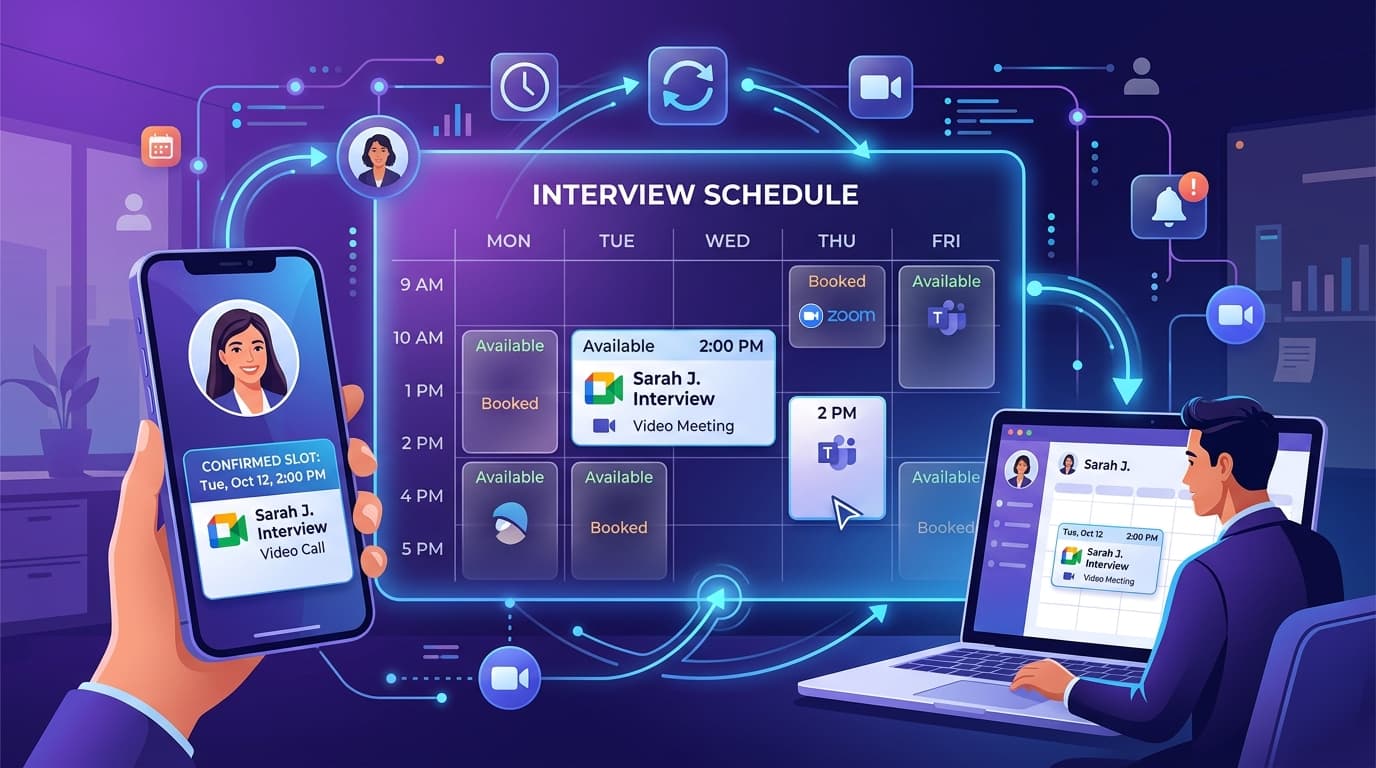
Use self-scheduling against real calendars and send reminders to cut no-shows. See [how to schedule interviews without the back-and-forth](/blog/interview-scheduling-without-the-back-and-forth). During the interview, ask the same core questions in the same order, then probe.
Step 7: Debrief with evidence
- 1Everyone submits scorecards independently before the debrief.
- 2Review ratings side by side and discuss the biggest disagreements first.
- 3Decide against the competencies, not "culture fit" or likeability.
- 4Record the decision and reason. This helps with feedback to candidates and with audits.
Struggling to get feedback in on time? Read [how to get hiring manager feedback on time](/blog/hiring-manager-interview-feedback).
How do you involve interviewers who don't use your ATS?
Guest or external interviewers (a client, an advisor, a senior leader) can be sent a secure scorecard link without an account, so their feedback lands in the same place. See [interviews with people who don't use your ATS](/blog/interviews-with-people-who-dont-use-your-ats) and guest interviewers.
What are common structured interview mistakes?
- Too many competencies (more than 6), which leads to shallow assessment.
- Every interviewer asks the same questions, so the panel is redundant.
- No anchors on the rating scale, so a "3" means different things to different people.
- Group debrief before written scorecards, which lets anchoring bias take over.
- Treating the scorecard as paperwork after the decision is made.
How does an ATS support structured interviews?
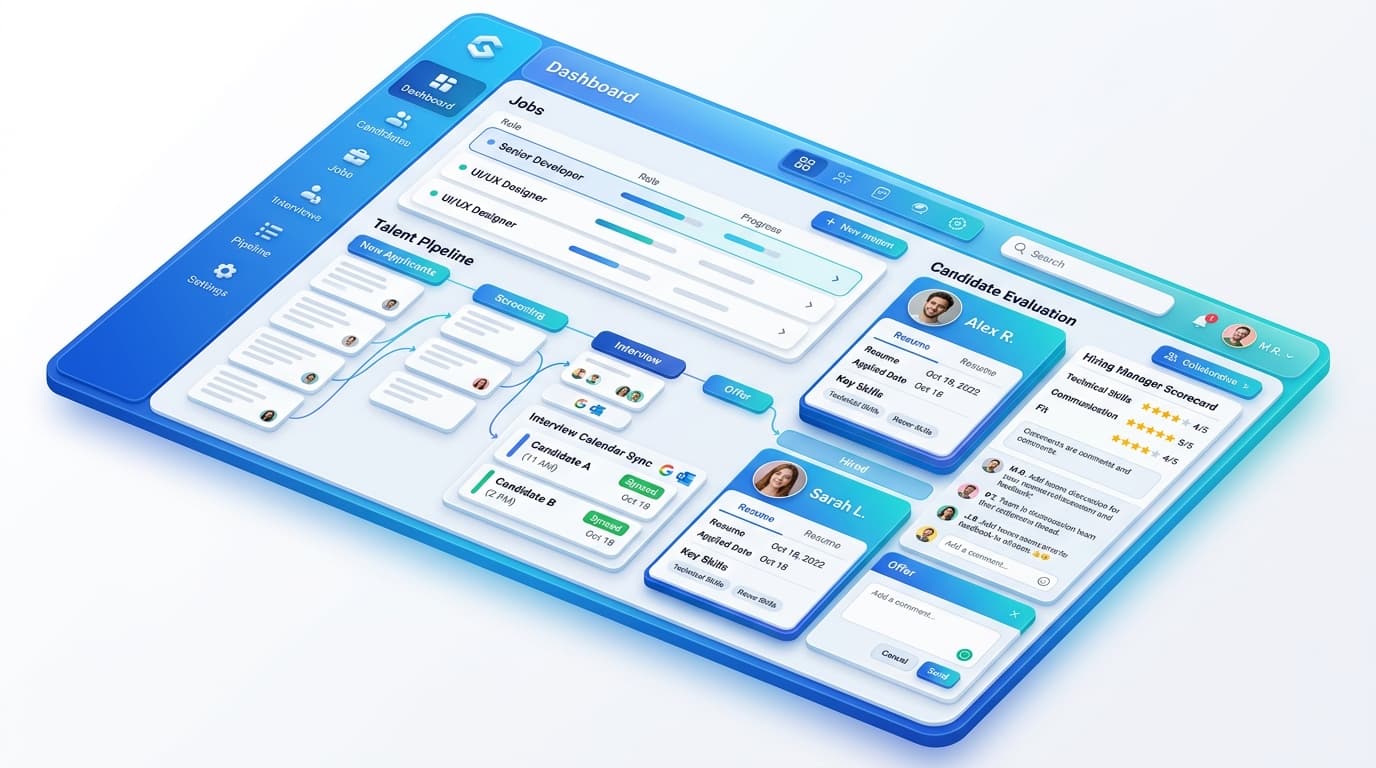
In OneATS, each job has an interview plan with stages and [scorecards](/features/scorecards) carrying your competencies and rating scale. Interviewers get their slot, questions and scorecard in one place. Ratings appear side by side for the debrief, and [interview scheduling](/features/interview-scheduling) handles calendars, video links and reminders. Interviewers and hiring managers don't need paid seats.
Frequently asked questions
What is a structured interview process? It's an interview approach where every candidate for a role gets the same job-related questions in the same order, and answers are scored on the same anchored scale using a scorecard.
Why are structured interviews better? They make candidates comparable, reduce bias from first impressions, and research shows they predict job performance better than unstructured conversations.
How many questions should a structured interview have? Usually 2–3 questions per competency, covering 2–3 competencies per interviewer, which fits a 30–45-minute slot with follow-up probes.
What should an interview scorecard include? The competencies being assessed, an anchored rating scale (e.g., 1–4), space for evidence notes, and an overall hire/no-hire recommendation.
Can structured interviews feel robotic? Not if you open with rapport, explain the format, and use natural follow-up probes. The structure is in the questions and scoring, not in the tone.
--- Free interview scorecard template · Scorecards in OneATS
Read next: [Hiring approval process](/blog/hiring-approval-process-guide) · [Recruitment pipeline stages](/blog/recruitment-pipeline-stages)
Editorial Integrity & Sourcing: All articles are authored and verified by our recruitment operations and engineering team. Product details verified against the OneATS product in November 2026. Job-board connections work as described on each integration page.

Pankaj Mukadam is the Head of Product at OneATS. With deep expertise in talent acquisition infrastructure and recruitment operations, he leads product architecture and hiring workflows at OneATS, helping companies streamline recruitment across India and globally.