Recruitment in India follows the same core steps as anywhere: approve the role, advertise it, screen, interview, offer, onboard. But job portals like Naukri, WhatsApp as the main candidate channel, 30–90-day notice periods, CTC-based offers, and the new DPDP Act all change how each step works. This guide walks through every stage with Indian specifics, templates and the tools that help.
- Plan for notice periods: most experienced hires join 30–90 days after accepting, so keep candidates engaged and build a backup pipeline.
- Use multiple channels: Naukri, LinkedIn, Indeed, your careers page and employee referrals, each tracked by source.
- Move candidate communication to WhatsApp (with consent). Response rates are usually far higher than email.
- From May 2027, the DPDP Act rules apply fully to candidate data: consent, purpose limits, retention and deletion.
What are the steps of the recruitment process in India?
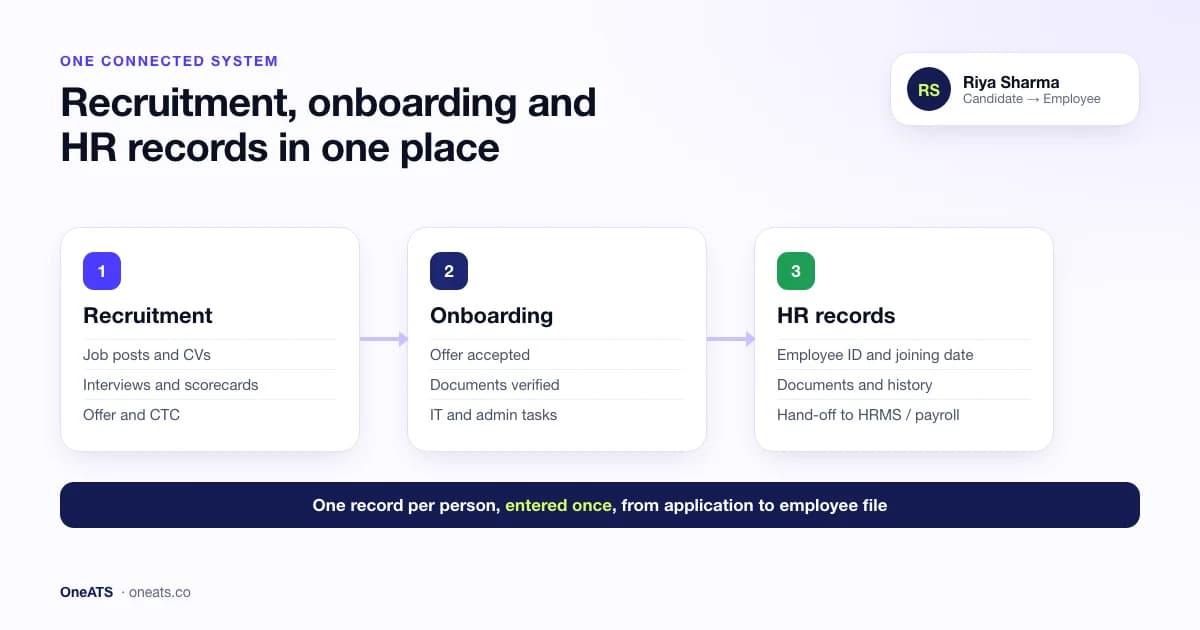
The recruitment process in India has 9 steps: (1) workforce planning and requisition approval, (2) job description and CTC band, (3) job posting across portals, (4) sourcing and referrals, (5) screening, (6) interviews, (7) offer and negotiation, (8) background verification and notice-period management, (9) onboarding and joining.
| Step | Indian specifics | Typical owner | OneATS feature |
|---|---|---|---|
| 1. Requisition | Budget approval in CTC terms; replacement vs new headcount | Hiring manager + finance | Hiring approvals |
| 2. JD + CTC band | Fixed + variable split; location (metro vs tier-2) | HR | JD templates |
| 3. Job posting | Naukri, LinkedIn, Indeed, foundit, apna/WorkIndia for frontline | Recruiter | Job distribution |
| 4. Sourcing | Naukri Resdex search, LinkedIn, referrals, campus | Recruiter | Talent pool, Referrals |
| 5. Screening | High applicant volume; phone screens; notice period & current CTC questions | Recruiter | Resume parsing, Match score |
| 6. Interviews | Panels, often 2–4 rounds; WhatsApp reminders reduce no-shows | Panel | Scheduling, Scorecards |
| 7. Offer | CTC breakup, joining date, notice buyout, counter-offers | HR + manager | Offer management |
| 8. BGV + notice | Background verification with consent; keep in touch during notice | HR | WhatsApp, onboarding portal |
| 9. Onboarding | Aadhaar, PAN, UAN/PF, bank details, education & experience proofs | HR + IT | Onboarding |
Step 1: How do you get a hiring requisition approved?
Write down why the role exists (new or replacement), the CTC band, the location, and the target joining date, then route it to the budget owner. Using a standard [job requisition form](/templates/letters/job-requisition-form) and a [hiring approval matrix](/templates/letters/hiring-approval-matrix) stops roles from going live without budget. More on this in our [hiring approval process guide](/blog/hiring-approval-process-guide).
Step 2: How should you write a job description for Indian candidates?
Lead with the role title candidates actually search for (e.g., "Inside Sales Executive", not "Revenue Associate II"), the city or "remote, India", years of experience, and the CTC range. Candidates filter heavily on salary and location. List 5–7 responsibilities and must-have skills. See [how to write a job description](/blog/how-to-write-a-job-description) and our 11 free JD templates.
Step 3: Which job portals should you post on in India?
| Channel | Best for | Cost model | Notes |
|---|---|---|---|
| Naukri | White-collar roles, 1–15 years' experience | Paid job postings + Resdex (CV database) | Largest Indian portal; (with over 90 million registered jobseekers per Info Edge filings) |
| Professional, tech and senior roles | Free basic posts + paid promoted jobs | Strong for employer brand | |
| Indeed | Broad roles across levels | Free organic + sponsored | Accepts XML job feeds |
| Google for Jobs | All roles | Free | Requires JobPosting structured data on your careers page |
| foundit (formerly Monster India) | Mid-level roles | Paid | — |
| apna, WorkIndia | Frontline, blue-collar, hourly | Paid credits | Mobile-first candidates |
| Your careers page | All roles | Free | Every channel should link back to it |
| WhatsApp groups / status | Referrals, local, frontline | Free | Use tracked links |
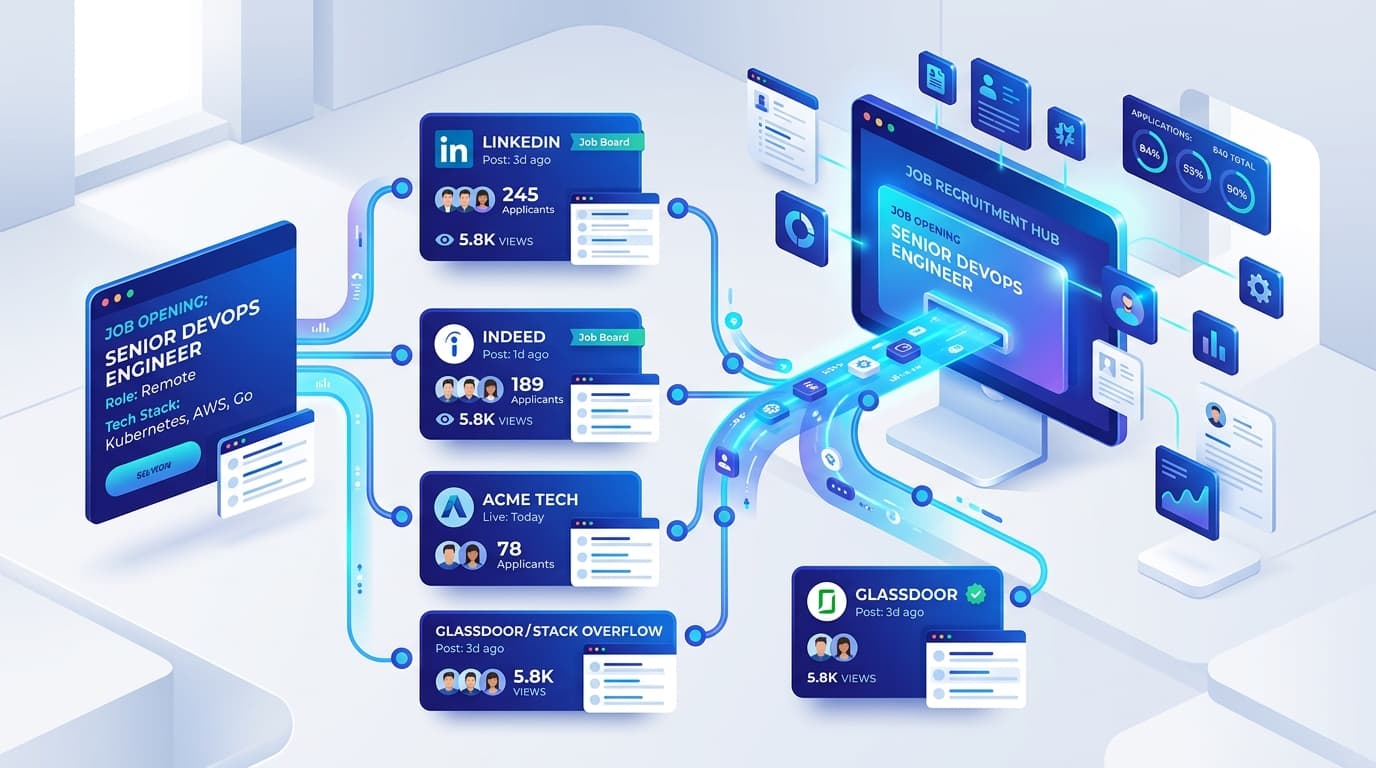
Post once, publish everywhere. Instead of retyping the job on every portal, use an ATS that sends one job to every channel with tracked links, so you know which source produced each hire. OneATS publishes to the careers page, Google for Jobs, LinkedIn and Indeed (feed) automatically, and prepares Naukri posts for assisted posting from your own Naukri employer account. Step-by-step: [how to post jobs on Naukri, LinkedIn and Indeed at once](/blog/post-jobs-on-naukri-linkedin-indeed-at-once).
Step 4: How do you source candidates beyond job portals?
- Employee referrals. Often the highest-quality source. Pay a referral bonus on joining or after probation. Guides: [employee referral program](/blog/employee-referral-program-guide) and [referral bonus in India](/blog/referral-bonus-india).
- Talent pool. Past applicants who were "silver medallists" are your cheapest next hire. Tag and re-engage them.
- Campus hiring. For freshers: plan drives around placement season. See campus recruitment software.
- LinkedIn outreach and communities for niche or senior roles.
Step 5: How do you screen high volumes of applicants?
Indian job posts often attract hundreds of applicants. Use:
- 1Knock-out questions on the application form (notice period, current location, expected CTC, must-have skill).
- 2Resume parsing, so every CV becomes a searchable profile.
- 3An explainable match score to rank applicants against the requirements, while a recruiter makes the final call.
- 4A 10-minute phone or WhatsApp screen covering notice period, current and expected CTC, reason for change, and location.
Step 6: How do you run interviews and reduce no-shows?
Candidate no-shows are one of the biggest time-wasters in Indian hiring. Three things help:
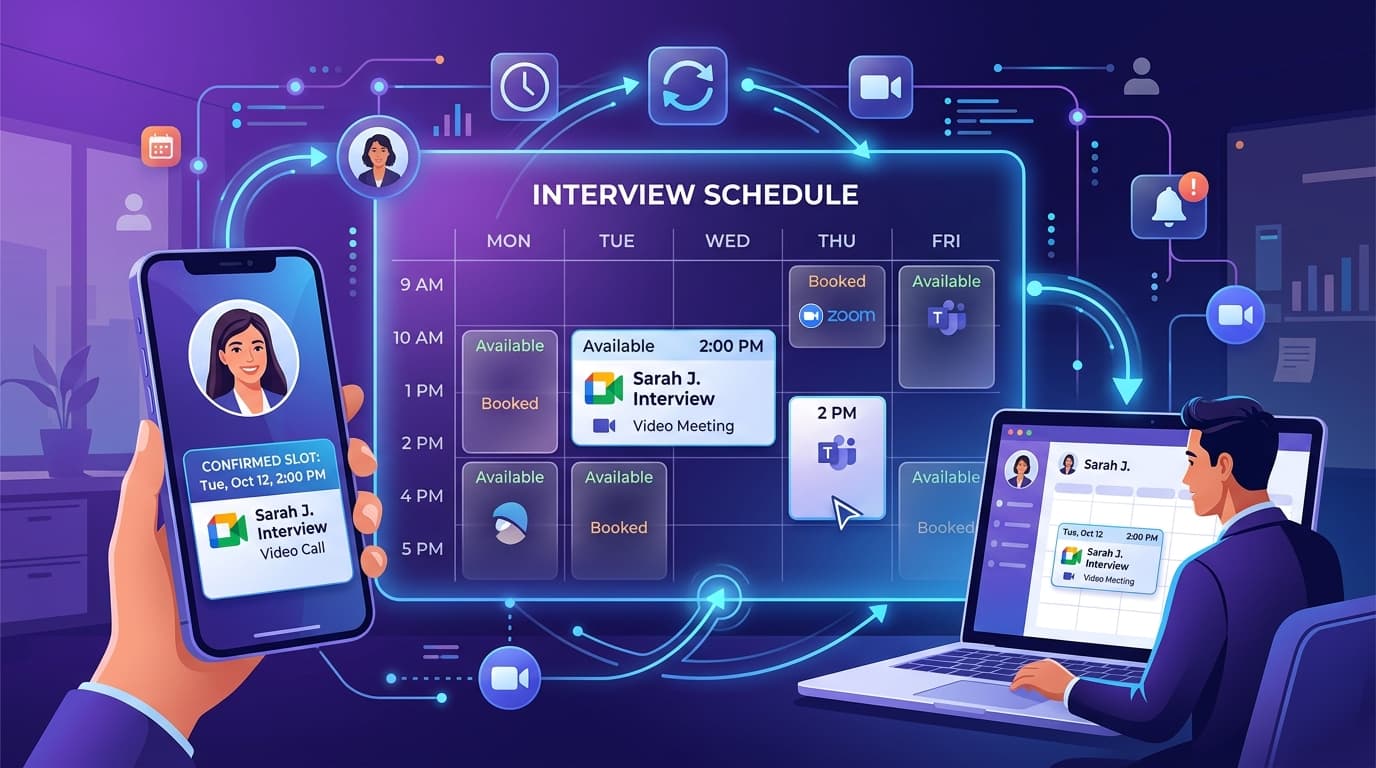
- Self-scheduling links synced to interviewers' Google or Microsoft 365 calendars, so the candidate picks a slot that works.
- WhatsApp reminders 24 hours and 2 hours before the interview, with the meeting link or office address. Templates: [WhatsApp interview reminders](/blog/whatsapp-interview-reminders).
- Structured scorecards so every interviewer rates the same criteria. See the [structured interview process](/blog/structured-interview-process-guide).
Step 7: How do offers work in India (CTC, negotiation, counter-offers)?
Indian offers are expressed as annual CTC (cost to company), broken into fixed pay, variable pay, employer PF contribution, gratuity and allowances. Always attach a [CTC salary breakup](/templates/letters/salary-breakup) to the [offer letter](/templates/letters/offer-letter) so the candidate sees in-hand pay.
- Negotiation: set an approved band and route anything above it for sign-off. See the [offer approval workflow](/blog/offer-approval-workflow).
- Counter-offers: expect the current employer to counter during the notice period. Ask about it early and keep in touch weekly.
- Notice buyout: decide upfront whether you'll pay a buyout to bring the joining date forward.
Step 8: How do you manage background verification and notice periods?
Background verification (BGV) usually covers identity, address, education, previous employment and sometimes criminal records. It's often done through a vendor. Under the DPDP Act you need the candidate's informed consent for BGV and must limit data to what's needed.
Notice periods in India are set by each employment contract and commonly run 30, 60 or 90 days for experienced hires. During that time:
- Send a welcome message and a "what to expect" note in week 1.
- Share the onboarding portal early so documents are ready before day one.
- Keep a backup candidate warm until the joining date is confirmed.
Step 9: What documents do you need to onboard an employee in India?
| Document | Purpose |
|---|---|
| Aadhaar (masked where possible) | Identity / address |
| PAN | Tax (TDS) |
| UAN / previous PF details | Provident Fund transfer |
| Bank account details | Salary credit |
| Educational certificates | Verification |
| Relieving / experience letters from previous employer | Employment verification |
| Passport-size photo, emergency contact | HR records |
Full list and timeline: [employee onboarding checklist for India](/blog/employee-onboarding-checklist-india).
What does the DPDP Act mean for recruitment in India?
The Digital Personal Data Protection Act, 2023 and the DPDP Rules, 2025 govern how you collect and use candidate data. The main obligations take full effect in May 2027 (under the notified DPDP transition roadmap). For recruiters this means: clear notice and consent when candidates apply, using CVs only for the stated purpose, deleting data when it's no longer needed (set retention rules), honouring access and deletion requests, and reporting data breaches. Read the full guide: [DPDP Act for HR teams](/blog/dpdp-act-for-hr-teams).
How long does recruitment take in India?
Time to hire (from application to offer acceptance) varies by role and seniority, so measure your own baseline. Add the notice period (30–90 days) to get the time to join. Measure both: see [time to fill vs time to hire](/blog/time-to-fill-vs-time-to-hire-formula).
How much does recruitment cost in India?
Your cost per hire includes job-board spend, referral bonuses, agency fees (often a percentage of annual CTC [SOURCE typical range]), recruiter time and tools. Formula and worked examples: [cost per hire](/blog/cost-per-hire-formula). For tools, see [ATS pricing in India](/blog/best-low-cost-ats-india).
What tools do Indian HR teams use for recruitment?
Most growing Indian companies combine job portals (Naukri, LinkedIn, Indeed), WhatsApp, Google or Microsoft calendars, and an [applicant tracking system built for India](/solutions/india-hiring) that ties them together, plus an HRMS/payroll for after joining. OneATS covers requisition to joining: posting with source tracking, parsing, scheduling with WhatsApp reminders, scorecards, CTC offer letters, onboarding documents with Aadhaar masking, and DPDP tools. It's free for one user.
Frequently asked questions
What is the recruitment process in India? It's the end-to-end process of hiring: requisition approval, job description and CTC band, posting on portals like Naukri and LinkedIn, sourcing, screening, interviews, offer, background verification, notice-period management and onboarding.
Which is the best job portal in India? Naukri is the largest for white-collar roles, LinkedIn is strongest for professional and senior roles, Indeed covers a broad range, and apna or WorkIndia suit frontline hiring. Most companies post on several and track which source delivers hires.
How do I post a job on multiple portals in India at once? Use an ATS with multi-channel posting. OneATS publishes to your careers page, Google for Jobs, LinkedIn and Indeed from one dialog and prepares Naukri postings with tracked links.
Is WhatsApp allowed for recruitment communication? Yes, with the candidate's consent. Use the WhatsApp Business API or an approved provider for automated reminders, and include opt-out options.
What is a typical notice period in India? Commonly 30, 60 or 90 days depending on seniority and the employment contract. Some employers allow early release or a notice buyout.
--- Start hiring the Indian way, in one place. Try OneATS free · ATS for India
Read next in this series: [Post jobs on Naukri, LinkedIn & Indeed at once](/blog/post-jobs-on-naukri-linkedin-indeed-at-once) · [WhatsApp for recruitment](/blog/whatsapp-for-recruitment-india) · [Referral bonus in India](/blog/referral-bonus-india) · [DPDP Act for HR](/blog/dpdp-act-for-hr-teams) · [Onboarding checklist India](/blog/employee-onboarding-checklist-india) · [Campus recruitment process](/blog/campus-recruitment-process)
Editorial Integrity & Sourcing: All articles are authored and verified by our recruitment operations and engineering team. Product details verified against the OneATS product in November 2026. Job-board connections work as described on each integration page.

Pankaj Mukadam is the Head of Product at OneATS. With deep expertise in talent acquisition infrastructure and recruitment operations, he leads product architecture and hiring workflows at OneATS, helping companies streamline recruitment across India and globally.